



New Conversation
We typically reply in a few minutes

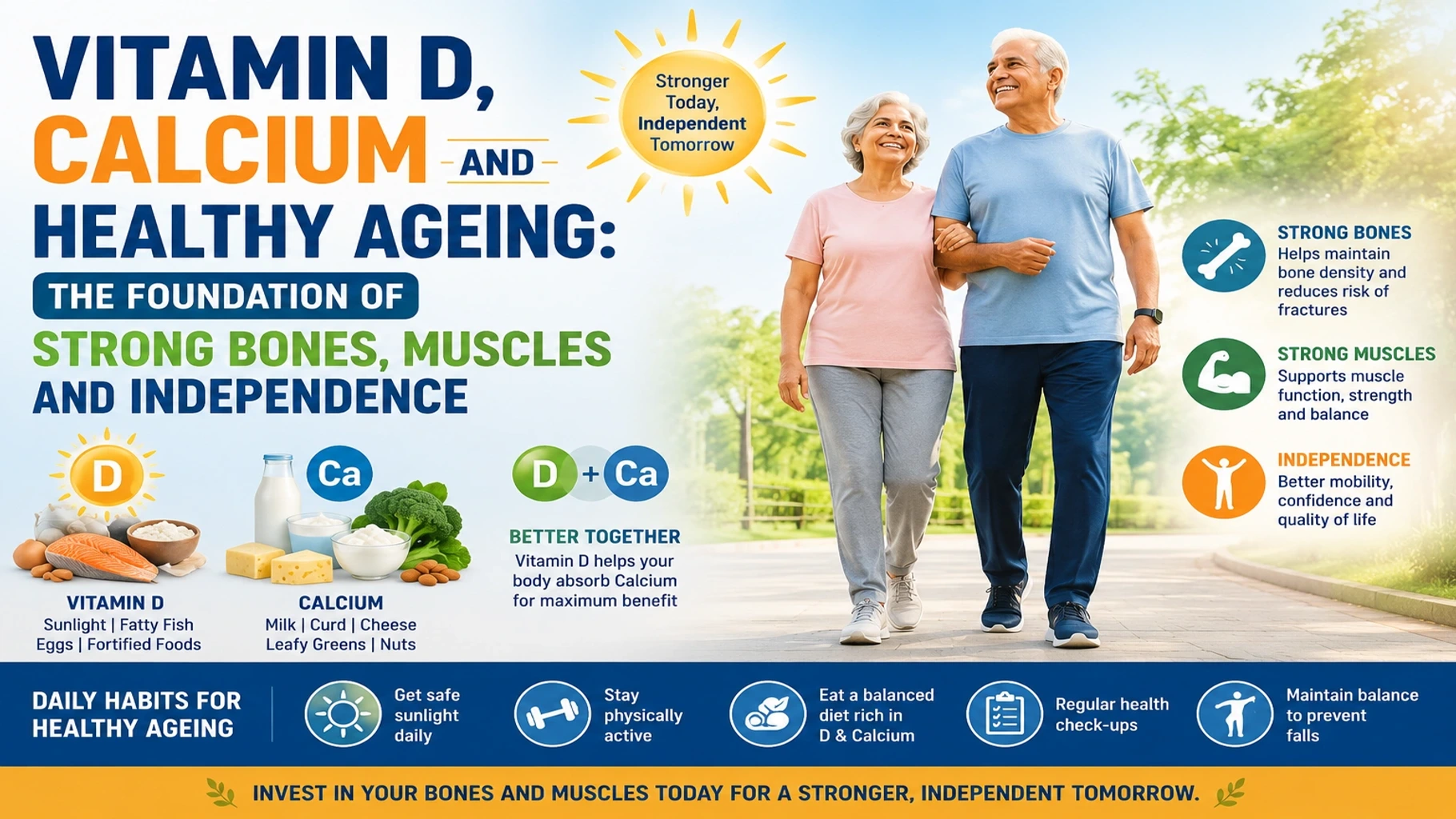
As we age, maintaining strong bones and healthy muscles becomes increasingly important. Two nutrients that play a central role in healthy ageing are Vitamin D and Calcium. Together, they help preserve bone strength, reduce the risk of fractures, improve muscle function, and support overall quality of life. However, many older adults are deficient in one or both, making them more vulnerable to osteoporosis, falls, and loss of independence.
Vitamin D is a fat-soluble vitamin that is unique because our body can produce it naturally. When sunlight (UVB rays) falls on the skin, cholesterol present in the skin is converted into Vitamin D3 (cholecalciferol). It is then transported to the liver, where it becomes 25-hydroxyvitamin D, and finally to the kidneys, where it is converted into its active form, calcitriol.
Since Vitamin D is fat-soluble, excess amounts are stored in the body's fat tissues and liver for future use. Its primary function is to regulate calcium and phosphorus absorption from the intestine.
Calcium is the most abundant mineral in the human body. Nearly 99% of the body's calcium is stored in bones and teeth, while the remaining 1% circulates in the blood and soft tissues, where it is essential for muscle contraction, nerve transmission, heart rhythm, blood clotting, and hormone release.
Unlike Vitamin D, calcium cannot be produced by the body and must be obtained from food or supplements.
With advancing age, several physiological changes occur:
These changes gradually weaken bones and muscles.
Vitamin D deficiency leads to poor calcium absorption, forcing the body to draw calcium from bones to maintain normal blood calcium levels. Over time, this results in:
Calcium deficiency further accelerates bone loss, increasing the likelihood of hip, spine, and wrist fractures. Hip fractures in elderly individuals are particularly serious, often resulting in prolonged disability and loss of independence.
Emerging evidence also suggests that Vitamin D deficiency may contribute to frailty, reduced muscle strength, impaired immunity, and slower recovery from illness.
Research over the past few years has refined our understanding of Vitamin D and calcium supplementation.
A large 2026 BMJ systematic review and meta-analysis, involving nearly 154,000 adults across 69 randomized clinical trials, concluded that routine Vitamin D or calcium supplementation alone offers little meaningful benefit in preventing fractures or falls in healthy, community-dwelling older adults. The review found only a small benefit when both nutrients were combined, primarily in selected high-risk groups.
This does not mean Vitamin D and calcium are unimportant. Rather, the findings suggest that supplements should be targeted to individuals with proven deficiencies, osteoporosis, limited sun exposure, malabsorption disorders, or other high-risk conditions, instead of being taken routinely by every older adult. Experts continue to emphasize obtaining these nutrients through a balanced diet, safe sunlight exposure, and regular physical activity whenever possible.
Nutrition alone cannot maintain strong bones. Bones respond to physical stress, making regular exercise essential.
Recommended activities for older adults include:
Regular exercise stimulates bone formation, improves muscle strength, enhances coordination, and reduces the likelihood of falls.
Protein intake is equally important, as muscles require adequate protein to remain strong and support healthy bones.
Vitamin D and calcium work best alongside several other nutrients:
Healthy ageing is not about relying solely on supplements. Strong bones require a combination of adequate nutrition, regular exercise, safe sunlight exposure, sufficient protein intake, and timely medical evaluation. Older adults who maintain an active lifestyle, consume calcium-rich foods, ensure adequate Vitamin D status, and engage in strength and balance exercises are more likely to preserve mobility, prevent fractures, and remain independent for years to come.
Not necessarily. A large 2026 BMJ systematic review of nearly 154,000 adults found that routine Vitamin D or calcium supplementation alone offers little meaningful benefit for healthy, community-dwelling older adults. Supplements are best targeted to those with proven deficiencies, osteoporosis, limited sun exposure, malabsorption disorders, or other high-risk conditions — rather than taken routinely by everyone.
With age, the skin produces less Vitamin D from sunlight, kidney function declines (reducing Vitamin D activation), calcium absorption from the intestine decreases, appetite often drops leading to inadequate intake, and reduced outdoor activity means less sun exposure — all of which combine to weaken bones and muscles over time.
Calcium-rich foods include milk, curd, paneer, cheese, ragi, sesame seeds, almonds, soy products, green leafy vegetables, and sardines. Vitamin D can be obtained from safe sunlight exposure (15–30 minutes), fatty fish like salmon and mackerel, egg yolk, fortified milk/cereals, and sun-exposed mushrooms.
Bone health also depends on Vitamin K2, magnesium, phosphorus, Vitamin C, Vitamin B12, folate, and adequate protein — along with regular weight-bearing exercise (like brisk walking, strength training, and balance exercises such as Tai Chi), since nutrition alone cannot maintain strong bones.



Explore recommended tests, packages, and expert-guided screenings.
We've received your request.
Our team will call you back shortly.